What is tarot? And where does it come from?
What is tarot? The tarot is a deck of cards, consisting of 78 cards with illustrations. Each illustration has its own story. Since the 13th century, the tarot has been known in Europe. Where exactly it came from has never been known. There are several theories about it, but nothing can be said with certainty.
There is evidence that the tarot originated from Egypt, as hieroglyphics were discovered in the 19th century that showed similarities with the images on tarot cards.
There is also a temple in Egypt where two rows of 11 huge paintings have been discovered in a hidden room. Since the Great Arcana (the key cards of the tarot) consists of 22 cards, this is certainly remarkable.
It is also said that the Gypsies who migrated to Europe came from Egypt ('Gypts' or 'Gypsies') and that they had brought the maps from their homeland, but according to history books, Gypsies originally came from India!
The tarot cards
Tracing the cards' true origins is also complicated by the fact that in the 14th century tarot was banned in many European countries: the cards were associated with the devil and witchcraft. In France, Italy, Switzerland and Germany, among others, many card games were destroyed, which has not helped in tracing the origins of these imaginative cards.
For me, this uncertainty about the tarot cards' origins actually adds to the mystique surrounding the game. No one knows exactly where the game came from or how it was created, but those who have learned to work with it soon notice how the tarot is capable of advising or warning us.
Not only that, we will even conclude that the answers we may receive from the tarot almost always turn out to be correct! In the tarot blog I teach you in a nutshell everything you need to know about this special oracle if you want to learn how to work with it.
The tarot consists of 78 cards that can provide answers to all types of questions. These 78 cards are divided into two sections: the Major Arcana and the Minor Arcana. Many people who want to learn to interpret and understand the tarot drop out here. The word 'arcana' is difficult and people don't know what it is. 'Never mind', is the thought then and that is a pity.
If we replace the word 'arcana' with 'secrets', it already sounds a lot less complicated. This is because 'Arcanum' is simply the Latin word for 'secret' (in the plural 'secrets', i.e. 'arcana'). So there are cards that stand for the major secrets (Major Arcana) and cards that stand for the minor secrets (Minor Arcana).

The Major Arcana
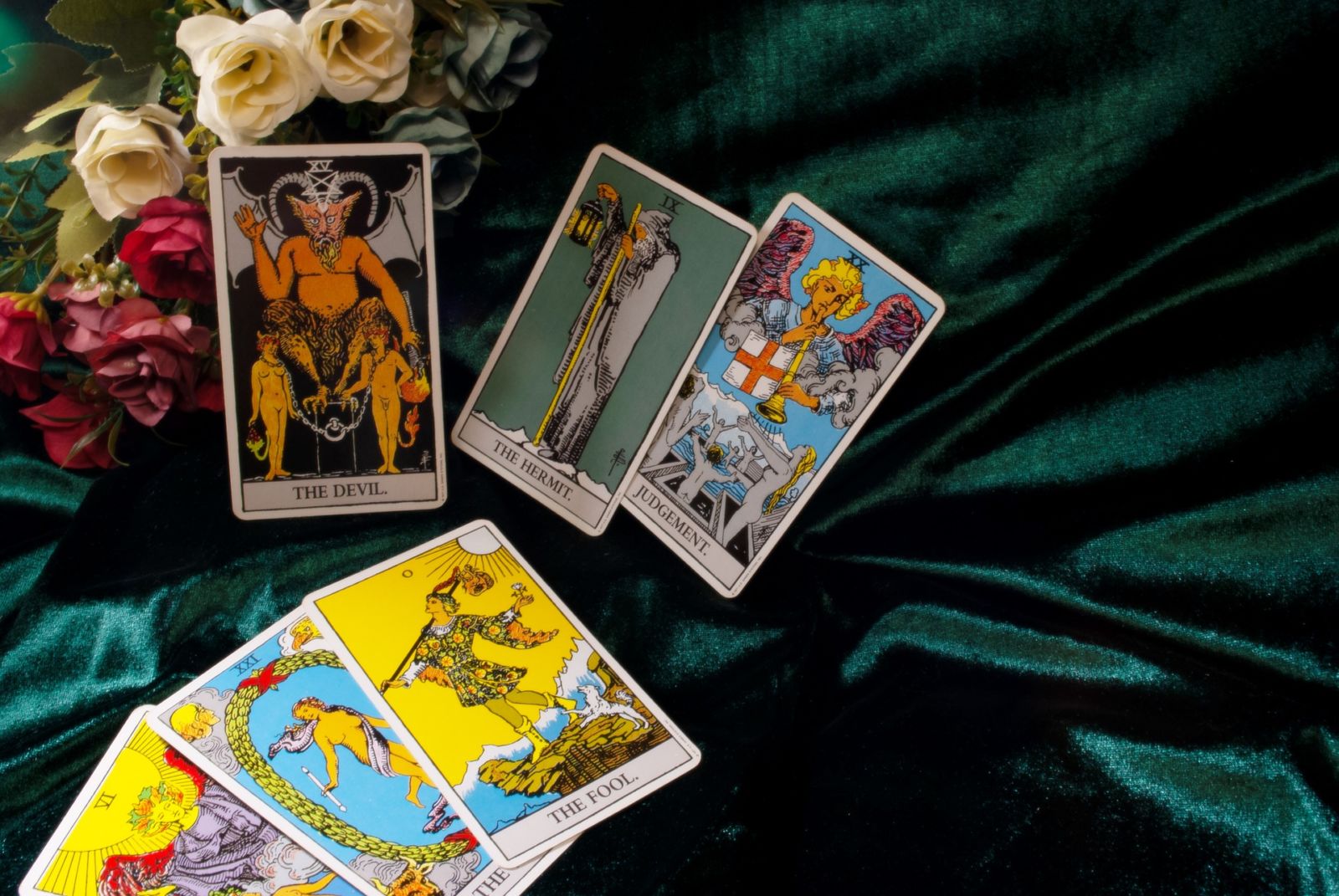
The Major Arcana consist of 22 cards, also called 'key cards' or 'trump cards'. These cards represent the major and important changes or events in our lives. All cards of the Great Arcana are numbered (from 0 to 21) and have a name, for example: 1. The Magician, 15. The Devil, 17. The Star, 21. The World, etc.
Numbering is usually indicated on maps in Roman numerals: I, II, III, IV, V, etc.
The Minor Arcana
The Minor Arcana represents the smaller events in our lives, the daily worries, our little sorrows, doubts, infatuations, disagreements, etc. Situations we all deal with on a daily basis.
The 56 cards of the Minor Arcana consist of four series (Swords, Rods, Cups and Pentacles) of 14 cards each: ten numbered cards (from 1 to 10), which are the so-called number cards, and four court cards, namely Squire, Knight, Queen and King.
These cards can be applied to all possible questions, but in general readings where no specific question is asked, this is the usual practice:
Swords
These 14 cards relate to reason, thinking, decision making, problem solving or conflict resolution.
Bars
These 14 cards relate to taking action - what is wise to do or not to do?
Cups (also called Goblets or Chalices)
These 14 cards cover friendships and relationships, feelings and emotions.
Pentacles (also called Pentagrams or Coins)
These 14 cards relate to matter, career and finance.
Some images on the cards scare you. Take, for example, the often dark and sinister drawings of the cards of the Swords series, or some cards of the Great Arcana, such as Death, The Devil and The Tower.
Nevertheless, all these cards have more or less positive meanings, and you will find more information about them in this tarot blog. Take the time to delve a little deeper and you will have a friend for life: the tarot!
Reading tip: Tarot study book
Tarot blog >HOME
 English (UK)
  Nederlands